Hi, I'm Colton.
I help leaders and teams learn to build with AI and think bigger about the impact they can make. I run a practice called Activation Playbook: hands-on AI activation and training.
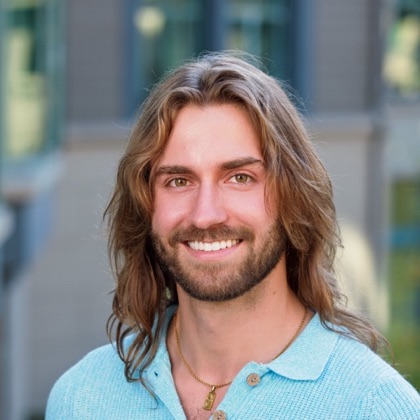
I help leaders and teams learn to build with AI and think bigger about the impact they can make. I run a practice called Activation Playbook: hands-on AI activation and training.
I'm a joint MBA/Master of Public Health student at UC Berkeley and part of Haas's inaugural cohort of the AI for Business certificate program, one of the first AI-focused MBA programs in the country.
I'm a former Amazon product manager and a graduate of Berkeley SkyDeck's Pad-13 incubator. As a founder myself, I have a deep respect for what it takes to lead an organization in a rapidly changing world. I was a graduate student instructor for Berkeley's Lean LaunchPad, and I love helping founders on their entrepreneurial journey.
More about my background on LinkedIn, or in the Berkeley Haas profile.
Most of the leaders I sit down with already know AI is a big deal. They've used Claude or ChatGPT. They're a little overwhelmed by the pace, a little unsure where they fit. They want a knowledgeable thought partner who's actually built with these tools, not another deck.
The practice is Activation Playbook. It runs through three types of engagement -- Activation Sessions, 1:1 Executive AI Coaching, and Applied AI in Residence -- but it's the same mode of working: hands-on, in the room with you, building things you can actually use.
Some of my favorite work happens in schools. I work with professors and administrators across UC Berkeley. With Annie Crangle, I also co-run The Prep Playbook, helping K-12 educators spend less time on paperwork and more on what drew them to this work in the first place: teaching, learning, and the most human parts of the job.
I was building a startup, alone, right after Claude Code came out. Building the product alone forced me to be a very early adopter, because I had to figure out how to build it. It was kind of remarkable, and it felt like a secret I was in on. It was completely changing the way I worked, and changing how I thought about myself, what I could do, and how technical I was. It made me realize I don't have to only move at the speed of the closest technical person to me.
I kept telling my friends about it, and my fellow students. I started showing them how to use it. I called them activation sessions... just helping people get the activation energy up to try these tools for the first time. It's always a lot easier than they think. Once they start using it, I see them start thinking differently about what they can do, and about the opportunities coming up.
By leading a lot of those sessions, people started connecting me to people they'd worked with, and to organizations and leaders. I started working with orgs, absolutely loved the work, and started officially building a practice. I've also worked with a lot of professors and administrators in the Haas and Berkeley ecosystem, which I've loved.
I talk more about the story and my approach on this episode of Here@Haas.
Colton
If something here landed, the easiest next step is a short conversation. No pitch, no pressure -- just a feel for whether the work fits.